Merge Dragons!
- 4.5
- Rating
- 50.00M
- Installs
- Free
- Price

 Analysis by App-foxy
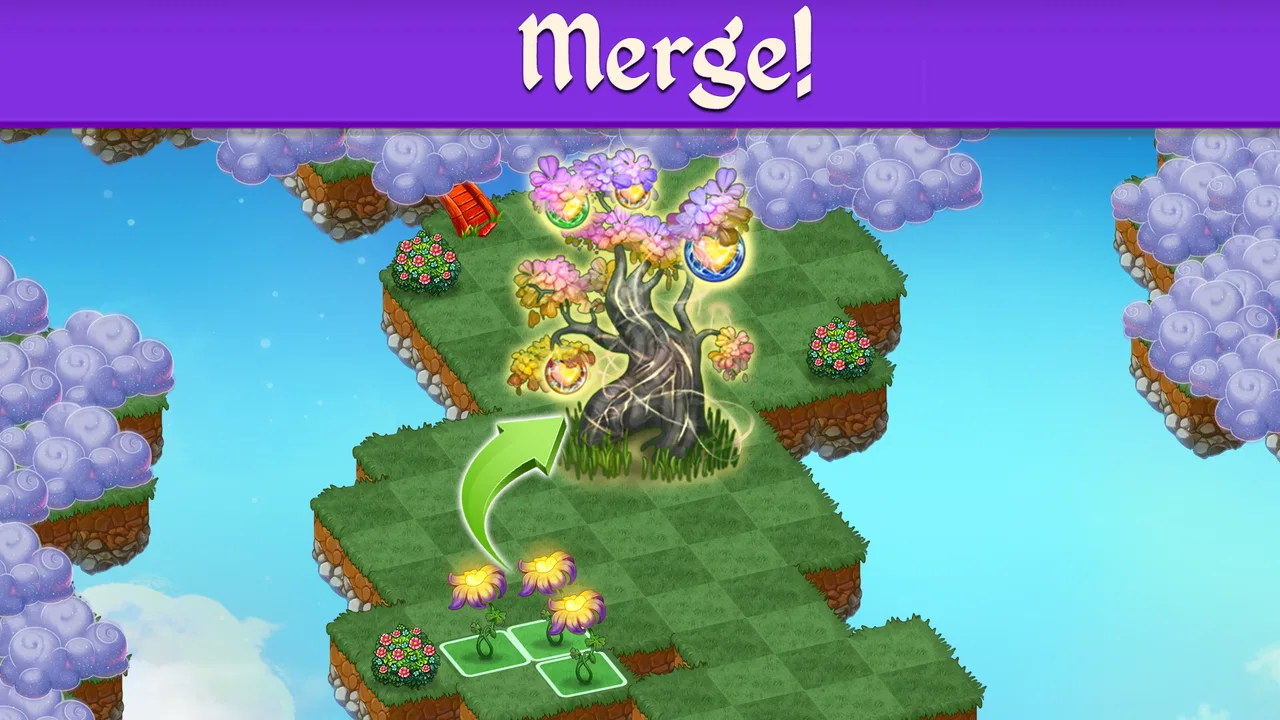
I spent time with Merge Dragons! as a puzzle game built around combining objects, growing a camp, and sending dragons into colorful adventures. The central idea is easy to understand: place matching items together, create a stronger item, and use that progress to open up more possibilities. What makes the game last longer than a quick matching toy is the way the camp gradually becomes a personal workspace rather than a series of disconnected boards.
My first impression was that it is approachable without being completely shallow. I could begin with small combinations almost immediately, but later decisions mattered more because the camp has limited room and every object competes for attention. That mixture makes it suitable for relaxed sessions, although it can also become surprisingly absorbing when I am trying to finish one more chain before closing the game.
Gram Games Limited is the developer, and the game is free to download with optional in-app purchases ranging from $0.99 to $399.99 per item. It is rated Everyone, runs on Android 7.0 and later, and the current version is 13.1.1. Those details make it broadly approachable, but the purchase range is important for families and anyone who prefers a completely predictable free-to-play experience.
You May Also Like

 Blood Strike: 2.5 Anniversary
Blood Strike’s Loadouts Turn Every Drop Into a Tactical Gamble
A close look at Blood Strike’s custom loadouts: how fast access to signature weapons reshapes its battle royale rhythm, rewards preparation, and narrows the gap between fights.

 Pandora - Music & Podcasts
Pandora’s Music Is Easy to Start, but Harder to Recover
Pandora’s strength is its low-effort path from a seed to a station. Its weak spot is how much confidence it asks you to place in connection, setup, and quiet recovery.

 8 Ball Pool
 Is Built on Rivalries, Rematches, and Routine
A close look at the rivalries, rematches, shared routines, and unanswered safety questions that turn a quick pool match into a persistent mobile community.

 Samsung Music
’s Quiet Strength Is Playing What You Already Own
Its reach comes less from spectacle than from dependable access to a personal library. That simplicity is both the app’s strongest retention engine and its ceiling.

 AccuWeather: Weather Radar
AccuWeather Review: A Quick, Clear Forecast for Everyday Decisions
For everyday plans, the best forecast is the one you can understand quickly. AccuWeather makes rain timing, radar, and local conditions easy to act on, with a few trade-offs.

 Hill Climb Racing
Why Hill Climb Racing Still Turns Crashes Into One More Run
A tiny car, a bumpy hill and one more upgrade: Hill Climb Racing keeps resurfacing because its simple chaos makes every near-miss feel personal.
More From Our News Desk
View All News


How the game feels to use in everyday play
I find the game easiest to enjoy when I treat each visit as a small planning session rather than a race to combine everything in sight. I scan the camp, decide which matching objects matter most, and leave myself room to make the next move cleanly. That simple routine makes the puzzle feel more deliberate, and it also sets up the practical question of how the merging works once the board starts filling up.
Readable goals and a navigation style that stays familiar
The strongest accessibility quality here is the clarity of the basic interaction. I do not need to learn a complicated control scheme: I look at the board, identify useful matching objects, and drag or tap through the next action. The visual language is bright and busy, but the purpose of the main activity remains understandable because progress is shown through visible transformations. A small group becomes something more valuable, and that result gives me a clear reason to keep organizing the board.
The camp works as a home screen for the wider game. Instead of treating it only as decoration, I use it to sort items, decide what deserves space, and prepare for another activity. That separation helps me understand where I am. When I want a slower planning session, I can focus on the camp; when I want a more directed challenge, I move into an adventure. The change of context is useful for players who find a single endless board tiring.
Text is not the only way the game communicates. Objects, colors, shapes, and animation carry much of the meaning. That helps when I am playing quickly or when reading every instruction is inconvenient. At the same time, a colorful interface can make similar objects harder to distinguish at a glance, especially when the camp becomes crowded. I found that deliberate organization is not merely cosmetic; it directly improves readability.
My practical advice is to keep related objects in separate areas instead of allowing the camp to become one large pile. I reserve a section for items that are part of an active merge chain and another for objects I may need later. This reduces accidental combinations and makes the next useful move easier to spot. It is one of the most effective ways to make the game feel calmer without changing any settings.
What the merging system asks from attention
The puzzle design rewards visual scanning more than rapid reflexes. I usually look across the whole camp, compare groups, and decide whether combining something now will help or waste valuable space. That makes the game a better fit for players who enjoy sorting and planning than for someone seeking a fast action game. The pace is generally forgiving enough for me to pause mentally between moves.
There is also a meaningful difference between an immediately convenient merge and a strategically useful one. Combining objects can clear clutter, but saving a group may allow a more valuable chain later. I learned to avoid merging simply because three matching items were available. Before acting, I check whether the result will open space, support a current objective, or block an area I still need to use.
This is a subtle strength for players with different concentration styles. Someone who wants a simple activity can make obvious combinations and still see progress. Someone who enjoys optimization can plan longer chains and manage the camp more carefully. The same board supports both approaches, although the second becomes more demanding once there are many competing items.
Motor comfort, touch precision, and sensory load
From a motor perspective, the game relies on ordinary touch gestures rather than complex sequences. I am mostly dragging objects into matching groups and tapping through choices. That is less demanding than a game that expects rapid swipes, repeated button presses, or precise timing. Short sessions work well because I can make a few moves and stop without losing the basic thread of what I was doing.
Still, “simple controls” does not mean every player will find them effortless. Dragging a small object through a crowded camp can require careful finger placement. When several items sit close together, I sometimes move the wrong one or create a merge I had not intended. Players with limited fine-motor control may find a sparse, well-organized camp much easier than a developed one filled with overlapping visual targets.
I also noticed that the game’s visual energy can be tiring for people sensitive to constant motion, bright color, or animated feedback. The dragons, objects, and transformations give the game its personality, but they also create a lot of activity on screen. I would approach it cautiously if animated effects or dense displays usually cause discomfort. The experience is most comfortable for me when I play in a quiet setting and keep the session short.
Sound is not essential to understanding the main puzzle loop, which is helpful when I play in public or prefer a quieter environment. I can follow the board through its visual changes and continue without needing to treat audio as the main source of instructions. That makes the game practical during a commute, a waiting room, or a short break, provided the screen is easy to see and touch accurately.
Playing in different situations
A realistic everyday use case is a ten-minute break between tasks. I open the camp, make a few planned merges, clear a little space, and leave once I reach a natural stopping point. This works better than I expected because the game does not require me to remember a complicated story or rebuild a long chain of actions after a short interruption. I can return to the visible board and quickly understand what needs attention.
It is also a reasonable choice for someone who wants a puzzle that can be played one-handed, although comfort depends on the device and how crowded the board is. The main actions are direct enough that I do not need a physical keyboard or a controller. On a smaller screen, however, the same compact layout that feels convenient can make objects harder to select accurately.
For families, the Everyone rating makes the game broadly suitable by age classification, but I would still explain the purchase system before handing over a device. Free entry does not mean every optional item is free, and the upper end of the listed purchase range is substantial. A child may understand the merging rules quickly while not fully understanding the real-world consequence of tapping a purchase option. Adult supervision and device-level purchase controls are sensible here.
The game can also suit players who prefer independent progress rather than direct competition. I am not pressured to react to another person’s move, and the camp gives me room to set my own pace. That said, players who need a completely offline, distraction-free puzzle should check their own expectations before choosing it. Its broader structure is designed to keep me returning, not simply to provide one finite set of logic problems.
Where the inclusive experience still becomes less comfortable
The biggest barrier is visual density. Early play is easy to read because there are fewer objects, but a fuller camp demands more sorting. Similar colors and repeated shapes can blend together, and the player has to create order manually. I consider this part of the game’s strategy, but it also means that the experience can become less accessible as progress increases.
Another limitation is the temptation to continue. The loop is deliberately good at presenting one unfinished task after another: a merge to complete, an area to improve, or a new objective to pursue. For me, that is motivating, but it can make stopping harder than expected. Anyone who wants a puzzle with a clear end to each session may prefer a traditional level-based alternative where completion is more definite.
The free-to-play structure is another point to weigh carefully. I can begin without paying, but optional purchases are part of the experience, and the listed range extends from small amounts to $399.99 per item. I would not recommend treating it as automatically cost-free simply because the initial download is free. Players who dislike spending prompts or who want to avoid all purchase decisions may be happier with a paid puzzle that offers its full content upfront.
Compared with a conventional match-three game, this feels less like clearing a fixed grid and more like managing a living collection of objects. That gives it more room for planning and personalization, but it also creates more clutter and more long-term commitment. Compared with a pure logic puzzle, it is more forgiving and decorative, yet less focused on a single clean mental challenge. If I want a quiet brain teaser with no ongoing collection to maintain, I would choose the simpler alternative. If I want a puzzle that gradually develops a space, this has the stronger appeal.
Small habits that make a meaningful difference
My first useful habit is to pause before every large merge. I ask whether the result improves the current objective or merely removes an object from view. This prevents the common mistake of sacrificing a useful chain for temporary tidiness. The game is more rewarding when I treat the camp as a limited planning area instead of a place where every possible match must happen immediately.
Second, I use empty space as a resource. A clear patch gives me room to bring related objects together and makes the board easier to scan. Keeping everything spread across the camp may look organized at first, but it increases the distance between matching groups and raises the chance of selecting the wrong item. Compact zones are easier for both strategic planning and accurate touch input.
Third, I separate “now” items from “later” items. Objects connected to the current task stay near the center of my attention, while uncertain items move to the edge. This reduces the mental cost of returning after an interruption. It also helps players who find visual clutter tiring because the important part of the board remains obvious.
Finally, I avoid judging progress only by how many things I have combined. A successful session may be one that leaves the camp easier to understand, even if it produces fewer dramatic transformations. That mindset makes the game less frantic and gives the player more control over the pace. It is especially useful for someone who enjoys the organizing side of puzzles more than chasing constant rewards.
Who will appreciate it, and who should pass
I would recommend this game to players who like gentle puzzle mechanics, collecting, visual organization, and long-term goals. It is a good match for someone who wants to play in brief bursts but also enjoys returning to a familiar space. The low complexity of the basic controls makes it approachable, while the camp management gives experienced players enough decisions to prevent the first few sessions from feeling empty.
I would be more cautious about recommending it to people who dislike animated interfaces, busy screens, recurring progression loops, or optional purchases. It is also not my first choice for someone seeking tightly designed logic problems with one correct solution and a clear finish. The game’s charm comes from accumulation and experimentation, so players who prefer minimalism may find its expanding camp more demanding than relaxing.
The rating of 4.5 from around 1.4 million ratings, together with over 50 million installs, suggests that the broad formula has connected with a large audience. I read those figures as evidence of reach rather than a guarantee that every player will enjoy the same rhythm. Its appeal depends heavily on whether you like turning a small action into a longer chain of progress.
My inclusive verdict after spending time with it
What I like most is that the game does not require speed to feel rewarding. I can approach it carefully, use the camp as a visual planning space, and stop after a short session. The core actions are easy to grasp, and the mixture of direct puzzles with gradual development gives the experience more personality than a basic matching board.
Its accessibility is practical rather than perfect. Clear visual feedback and simple gestures help, but crowded layouts, small targets, animation, and purchase prompts can create friction. The player has to manage the board thoughtfully, and that responsibility is both part of the strategy and part of the challenge. Good organization improves readability, motor accuracy, and concentration at the same time.
As a free puzzle game for Android, it is worth trying if you want a colorful, patient activity that can grow over time. I would begin with purchase safeguards in place, keep the camp deliberately organized, and play in shorter sessions if visual stimulation becomes tiring. My honest recommendation is to try it for the merging and camp management, not because it is the simplest puzzle option. For me, that distinction explains both its lasting appeal and the situations where another game would be a better fit.
FAQs for Merge Dragons!
01What is the main objective of Merge Dragons!?
In Merge Dragons!, the main objective is to discover, merge, and evolve various items to restore the land. Players merge items such as eggs, plants, treasures, stars, magical flowers, and even dragon legends themselves. As you progress, you unlock new levels and challenges, helping the dragons revive their world by solving puzzles.
02Is Merge Dragons! free to play, or does it require in-app purchases?
Merge Dragons! is free to download and play. However, it does offer in-app purchases for players who wish to enhance their gameplay experience. These purchases can include additional gems, coins, or special items that help progress through levels faster. While purchasing is optional, it can provide a competitive edge.
03What platforms is Merge Dragons! available on?
Merge Dragons! is available on both Android and iOS platforms. You can download it from the Google Play Store for Android devices and the Apple App Store for iOS devices. The game requires a stable internet connection for certain features, such as events and updates.
04Are there any social or multiplayer features in Merge Dragons!?
Merge Dragons! primarily focuses on single-player gameplay, but it does include some social features. Players can connect their game to Facebook to save progress across devices and compete with friends in special events. Although direct multiplayer interactions are limited, the competitive aspects add a social element.
05How often does Merge Dragons! receive updates or new content?
Merge Dragons! regularly receives updates that introduce new levels, items, and special events. These updates keep the content fresh and engaging, providing players with new challenges and opportunities to discover rare items. The developer, Gram Games, actively engages with the community to ensure a dynamic and enjoyable experience.
Pros
- Engaging puzzle mechanics.
- Regular updates with new events.
- Beautiful graphics and design.
- Suitable for all age groups.
- Offline play available.
Cons
- In-app purchases can be pricey.
- Energy system limits playtime.
- Requires a lot of device storage.
- Repetitive tasks over time.
- Ads can be intrusive.

Merge Dragons!
Gallery